Not Bossy, Just Aggressively Helpful: A Designer's Take
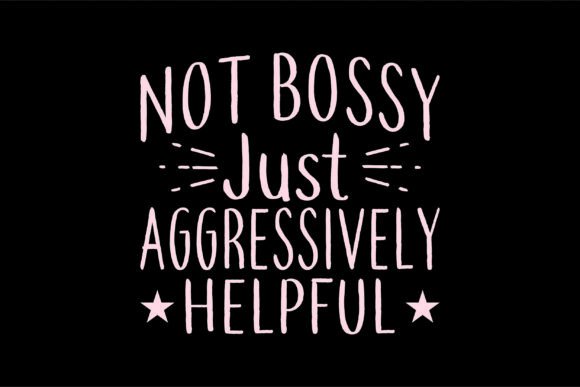
Let's talk about that phrase. "Not Bossy, Just Aggressively Helpful." It landed in my inbox as a graphics file, and I immediately chuckled. That’s the first win for any embroidery design—it has to grab you, emotionally or humorously, before it even hits the fabric. This one does. It’s playful, self-aware, and carries a distinct personality that’s perfect for today’s market where a bit of witty honesty sells. As a designer who reviews files for real project use, my job isn't just to admire the artwork; it's to envision it stitched out, worn, gifted, and sold.
The Natural Habitat for This Aggressively Helpful Spirit
So, where does this personality belong? I picture it immediately on a well-made tote bag for a friend who always organizes the group trip, or embroidered neatly on the cuff of a cozy, premium sweatshirt. It feels like a boutique product. It’s not just a t-shirt design; it’s a statement piece for custom apparel that people buy because it resonates personally. I can also see it working beautifully as a small, neat patch on a denim jacket or a crisp, clean stitch on a kitchen apron—the kind of item you’d see in a small shop specializing in clever, handmade products.
The layout and typography here are key. It’s presented as clean lettering, which means for embroidery, we’re looking primarily at satin stitches for the bold parts and likely running stitches or a lighter fill for the details. This isn’t an overly dense, complex graphic. That’s a practical advantage. It translates well across mediums: from an embroidered pillow cover for a home office to a neatly stitched tea towel—a fun gift for that "helper" in the family.
Stitching It Into Reality: Practical Considerations
When I think about running this embroidery file on an actual machine, a few scenarios come to mind. On a light-colored, stable fabric like a cotton tote or a firm sweatshirt material, it will sing. The contrast will be high, and the stitches will sit cleanly. The mood is confident and friendly, and that needs to be mirrored in a crisp, professional stitchout to maintain product value and customer trust.
However, this is where the practical judgment kicks in. On dark fabrics, you’ll need to plan your thread colors carefully—a white or bright top thread with a potential dark underlay might be necessary to keep that "aggressively helpful" clarity. Also, because it’s text-based, if you’re thinking of scaling it down very small for a baby item or a cap’s curved surface, inspect those small details in your software first. Tiny lettering can lose definition if the stitch density isn’t adjusted. Always, always test on scrap fabric first.
Where This Design Should Proceed with Caution
I’d be cautious with very thin or stretchy fabrics without excellent stabilizer, as the text could distort. Also, for products destined for frequent washing, like everyday t-shirts, consider a simpler stitch count version if available, to ensure longevity. This design isn’t inherently problematic for these uses, but it demands a thoughtful setup. That’s the mark of a good embroidery designer—anticipating the context.
More Than a Stitch: Impact on Your Craft Business
For the makers, the Etsy sellers, the creative entrepreneurs—this design is a solid asset. Its humor is its selling point. It engages buyers because it’s relatable. Embroidered onto a high-quality blank, it feels like a personalized gift, not just generic merchandise. That boosts handmade presentation and can align perfectly with a brand that’s about clever, observational humor.
For commercial embroidery projects, say for a small team wanting matching hoodies, it fosters a sense of playful identity. The value comes from its application. Using the provided PNG files for printable mockups on your website or the SVG for digital product previews makes your listing look professional. It’s a design that, executed well, looks intentional and polished.
A Few Embroidery Designer Notes Before You Hoop It
- Test the design on both light and dark scrap fabric to judge thread contrast.
- Check the stitch density in your software; for text, overly dense fills can make areas stiff.
- Confirm your hoop size can accommodate the design at your desired scale—don’t force it into a tiny hoop if the details need space.
- Use a stabilizer appropriate for your final fabric. This is non-negotiable for clarity.
- Always verify the licensing terms of the graphics file before selling finished items or digital products. The product description mentions included file formats, but the license for commercial use is a separate, critical piece of information you must confirm.
In the end, "Not Bossy, Just Aggressively Helpful" is more than a funny phrase. It’s a design with a strong, applicable personality. It belongs on items that carry a sense of warmth and wit. From a custom embroidered tote bag at a craft fair to a special-order sweatshirt in your small shop, its success hinges on your skill as the embroiderer to translate that digital file into clean, confident stitches. That’s the partnership: a great concept and your expert execution. When that happens, the finished product isn’t just bossy—it’s brilliantly helpful.