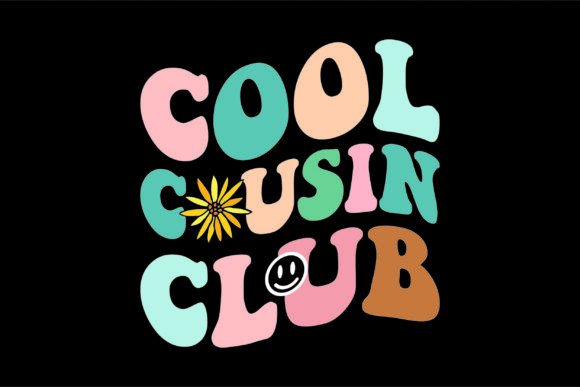
Cool Cousins Club: A Retro Design That Feels Like Family
When you open the files for the Cool Cousins Club design, the first impression is a wave of nostalgia. It’s not just retro; it’s warm. The layout, with its implied family group, has a loose, welcoming personality that avoids being too rigid or cartoonish. This isn’t a sterile graphic; it’s a design with a mood. For an embroidery designer thinking about real projects, that mood is the starting point. It tells you this design belongs on items meant to feel personal, cherished, and a little bit playful.
The Kind of Project This Design Was Born For
I immediately pictured this on a heavyweight cotton tote bag. The retro vibe paired with a sturdy, everyday object makes sense. But my mind didn’t stop there. This design has a softness that translates beautifully to a cozy sweatshirt, perhaps as a gift for a family reunion. The detail level, from what I can assess in the provided files, suggests it can handle a mid-scale embroidery without getting lost. It wouldn’t feel overpowering on a baby’s blanket or nursery pillow cover, acting more as a sweet decorative accent than a bold statement. For a small business owner, especially one selling at craft fairs or on Etsy, this Cool Cousins Club design slots perfectly into the “personalized gift” category. It’s inherently giftable.
Where the Stitching Will Shine and Where to Tread Carefully
In practical embroidery situations, this design’s strength will be its overall shape and theme. On a custom apparel item like a t-shirt or sweatshirt, the grouped figure will create a clear, engaging focal point. For an embroidered patch, the retro styling would lend itself to a handmade, vintage-look product that could sell well. However, the practical designer’s eye looks for potential hiccups. Any tiny lettering or extremely dense stitch areas within the design would need special attention. On stretchy fabric like a standard t-shirt, using the correct stabilizer is non-negotiable to maintain the design’s integrity after washing. On dark fabric, thread color contrast becomes paramount; you’d need to choose shades that pop but still feel retro.
Curved surfaces like caps can be a challenge for any design with a wider layout. You’d need to check the design’s dimensions against your hoop size to ensure it fits the curved area without distortion. Similarly, on textured fabrics like some tote bag materials or aprons, the stitch clarity might soften a bit, which could actually enhance the handmade, rustic presentation if that’s your brand aesthetic.
Beyond the Hoop: How This Design Adds Value
Using a design like Cool Cousins Club in your work affects more than just the stitch quality. It impacts customer perception. A well-executed embroidery of this theme on a product signals thoughtfulness. It moves an item from generic to sentiment-rich. For a creative entrepreneur, that boosts product value and buyer engagement. It feels like a complete handmade product, not just a slapped-on graphic. This consistency, if you use it across a line of family-themed gifts, can build subtle brand recognition. It’s professional because it’s coherent and has a clear emotional hook.
A Real Scenario: Preparing a Holiday Gift Tote
Let’s walk through a real case. Imagine you’re preparing a custom embroidered tote bag as a holiday gift for a client who wants it for her cousin. You’ve selected a natural canvas bag. You pull up the Cool Cousins Club design file. Your first step isn’t to hoop the bag. It’s to test on scrap canvas. You run a section, checking how the fill stitches handle the fabric’s weave. You review the stitch density on your machine’s preview to see if any areas are so dense they might puck. You confirm your hoop size can accommodate the full design without needing to resize it, which can alter proportions. You inspect the small details—perhaps the outlines of the figures—to ensure your chosen thread weight will render them clearly. You might even test the design in a simple black and white mockup to see how it reads without color, a good check for form.
Then, you consider the final product. Stitched in a palette of muted, retro colors on that canvas, it will look intentionally crafted. The client’s reaction will likely be about the sentiment, not just the technique. That’s the power of a design with a strong personality like this one.
Essential Notes for the Practical Designer
Before committing any design to a final product, a few principles are universal. Always test on a scrap of your intended fabric first. This tells you everything about thread tension, stabilizer need, and fabric interaction. Check thread color contrast against both light and dark backgrounds if you plan to use the design across different products. The provided file formats—EPS, PDF, SVG, PNG—are a robust set for digital workflow, allowing for adjustments and quality mockups, but they are guides. The machine embroidery file you ultimately use will dictate the real stitch behavior.
Discuss where the design should be used carefully: small hoop sizes, textured fabrics, thin fabric, stretchy fabric, dark fabric, layered garments, curved surfaces like caps, detailed corners, tiny lettering, dense stitch areas, decorative accents, and products that need frequent washing.
Crucially, confirm the licensing terms for this Cool Cousins Club design. The description mentions it’s for home print, but as a professional using it for client projects or small shop merchandise, you must understand your rights. Can you sell the finished embroidered tote bag? Can you use it for commercial embroidery projects? Never assume. This protects your business and respects the designer’s work.
In the end, the Cool Cousins Club design is a tool with personality. Its retro cousin family theme is its biggest asset. Your job as the embroidery designer is to match that personality with the right fabric, the right product, and the right execution. When you do, it stops being just an embroidery file and becomes the heart of a product that people feel connected to. That’s the real project use we’re all aiming for.